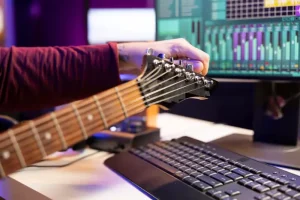
Imagine standing in a dark room where a deep electronic pulse causes enormous shapes to expand across the walls. As the music becomes softer, the colors fade. A sudden high-pitched sound creates thin lines that move rapidly through the space. The images are not simply playing alongside the music. They are reacting to it, interpreting it, and changing with every sound. This experience captures the creative potential of audiovisual art.
So, what is audiovisual art? It is a form of artistic expression that combines sound and visual elements to create one connected experience. Artists may use music, environmental recordings, electronic tones, spoken words, animation, moving graphics, projections, or generative imagery. The defining feature is the relationship between what the audience hears and what it sees. Both elements contribute to the meaning and emotional impact of the work.
Traditional films and music videos also combine sound and images, but audiovisual art often goes further. It may allow sound to influence visuals in real time. A change in rhythm can alter movement. A shift in frequency can transform color or shape. A live performer may even influence the visual system through an instrument, microphone, or movement sensor. The result can change from one performance to another.
The growing availability of digital tools has made this creative approach more accessible. Artists can now build responsive visual environments without relying entirely on large production studios. They can experiment with sound analysis, creative coding, projection systems, and interactive software. Understanding what is audiovisual art therefore means exploring both its artistic foundations and the technology that allows sound and imagery to interact.
The Creative Ideas Behind Audiovisual Expression
Audiovisual art has developed through several creative traditions. Experimental cinema, electronic music, animation, performance art, sound sculpture, and digital media have all contributed to its evolution. Artists have long explored how images and sounds can influence one another. Digital technology has expanded these possibilities by making visual responses more immediate, flexible, and interactive.
From Experimental Film to Live Digital Performance
Early experimental filmmakers challenged the idea that moving images had to tell a conventional story. They explored abstract shapes, repeated patterns, changing light, unusual editing, and visual rhythm. Some artists also experimented with music and sound to create relationships between visual movement and auditory structure. Instead of using sound only to explain what appeared on screen, they treated both elements as parts of a larger composition.
Electronic music later offered new possibilities. Synthesizers, sequencers, drum machines, and other electronic instruments produced sounds that could be shaped, repeated, and manipulated with precision. These sounds encouraged artists to explore visual forms that reflected repetition, frequency, rhythm, and texture. Concert environments also became spaces for projected imagery, experimental lighting, and live visual performance.
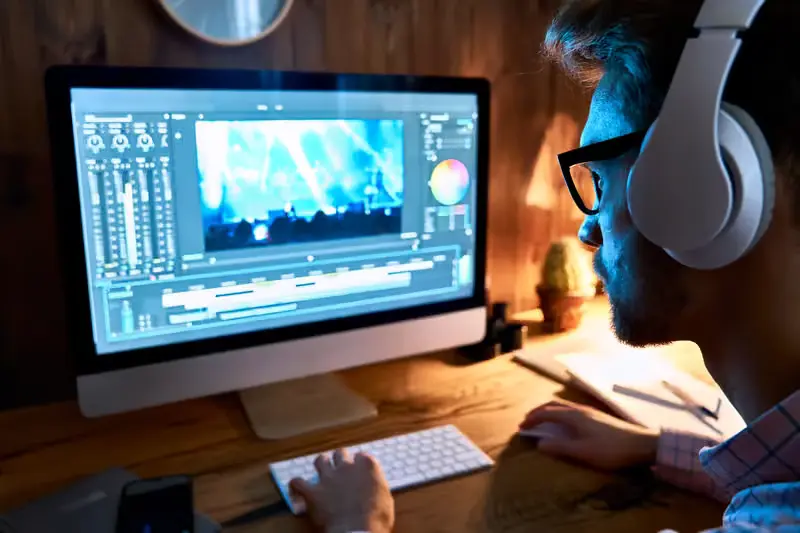
Today, digital artists can create systems in which visuals respond directly to audio signals. A musician may perform live while a visual artist manipulates graphics on a computer. Another artist may build a system that automatically generates images based on the changing characteristics of a sound. Some works combine both methods, allowing algorithms to respond while the artist maintains creative control.
This development has changed the role of the visual artist. Instead of producing a fixed sequence of images, the artist may design a visual system with rules, behaviors, and possible outcomes. The final performance becomes a collaboration between the artist, the technology, and the sound itself.
Synesthesia, Perception, and the Relationship Between the Senses
The connection between sound and imagery also has a psychological dimension. People often describe sounds using visual language. A low tone may feel dark or heavy, while a bright, sharp sound may seem connected to a thin line or vivid color. These associations are not universal rules, but they can provide useful creative starting points.
Some people experience synesthesia, a condition in which stimulation of one sense is automatically associated with another. For example, a person may consistently experience particular sounds as colors. Artists can explore similar cross-sensory relationships intentionally, even when they do not experience synesthesia themselves. They may assign colors to musical notes, connect movement to rhythm, or use visual density to represent sound intensity.
However, audiovisual art does not need to translate every sound into an obvious image. A visual response can be symbolic, emotional, or unexpected. A gentle melody might produce an unstable geometric structure to suggest vulnerability. A harsh industrial recording might create slowly moving organic shapes. The relationship becomes interesting because the image offers an interpretation rather than a literal illustration.
This freedom is important. The strongest work often leaves room for the audience to form personal associations. Viewers are not simply receiving information. They are experiencing a relationship between two sensory forms and deciding what that relationship means.
How Sound Design Shapes the Visual Experience
Sound design provides the material from which many audiovisual systems develop. It includes the selection, recording, editing, processing, and arrangement of sounds. In an audiovisual artwork, sound can serve as the emotional foundation, the source of visual data, or both. The artist decides which audio characteristics should influence the imagery and how strongly those characteristics should affect the result.
Rhythm and tempo are common starting points. A steady beat can control the movement of shapes, the timing of transitions, or the appearance of repeated patterns. Faster rhythms may create more energetic visual activity, while slower rhythms can support gradual transformations. Yet the relationship does not have to be direct. An artist might use a fast beat to create slow, floating imagery, producing a deliberate contrast between what the audience hears and sees.
Frequency provides another source of visual information. Low frequencies are often associated with bass and deep sounds, while higher frequencies contain brighter or sharper components. An artist can use frequency analysis to assign different visual behaviors to different parts of the sound spectrum. Bass may influence the scale of an object, mid-range frequencies may affect its movement, and high frequencies may create small flashes or detailed patterns.
Amplitude, which relates to the strength of a signal, can influence visual brightness, size, opacity, or movement intensity. A louder sound might cause a shape to expand, while a quieter section could make it contract or become transparent. These mappings can be adjusted to create a controlled visual language rather than a simple reaction to volume.
Texture is equally important. A smooth sustained tone might produce flowing gradients or continuous movement. Distorted audio could create fragmented surfaces, irregular lines, or unstable shapes. Silence can also become a powerful creative element. Instead of filling every moment with movement, an artist may allow the image to become still when the sound disappears. That pause can create tension and make the next visual change more meaningful.
When considering what is audiovisual art, it is important to understand that sound and imagery do not have to match perfectly. Synchronization is useful, especially when a visual event needs to respond to a specific musical moment. However, a more expressive work may allow images to develop at a different pace. The artist can use delay, contrast, repetition, and unexpected changes to create a richer experience.
The Digital Tools That Make Images Respond to Sound
Real-time audiovisual work depends on tools that can receive sound, process information, and produce visual output quickly enough for the audience to experience the connection. These tools range from visual programming environments to custom software, coding frameworks, game engines, and hardware controllers.
Audio Analysis and Signal Processing
An audio signal contains information that can be measured and interpreted. Software can examine its waveform, frequency spectrum, amplitude, rhythm, and other features. Artists use this information to create control values that influence visual behavior.
For example, a system may receive audio from a microphone or a prerecorded track. It can analyze the signal and identify changes in low, middle, and high frequencies. These values can then control separate visual parameters. A bass increase might enlarge a central shape, while a rise in high-frequency energy could introduce fine particles or rapid flickering. A rhythm detector might trigger a change in the visual composition when it recognizes a strong beat.
Tools such as TouchDesigner include audio analysis components that can identify frequency levels, rhythm-related information, and other sound characteristics. Its Audio Spectrum CHOP can calculate the frequency spectrum of incoming audio, while its audio analysis components provide information such as low, mid, and high levels. These features give artists a practical way to connect sound data with visual systems.
Signal processing also requires careful adjustment. Raw audio can be unpredictable. A small change in volume may produce a dramatic visual reaction if the system is too sensitive. Smoothing, filtering, threshold settings, and normalization help control this behavior. Without them, the visuals may appear nervous, unstable, or unrelated to the intended artistic direction.
Real-Time Graphics, Generative Systems, and Creative Coding
Once audio data has been analyzed, the visual system needs a way to turn that information into images. Real-time graphics tools make this possible by generating shapes, textures, animations, particles, and three-dimensional environments while the artwork is running.
Visual programming environments are useful because they allow artists to connect different operations through nodes or visual components. A user can route audio information into a visual parameter without writing every part of the system from scratch. This approach supports experimentation and makes it easier to see how one change affects the overall composition.
Creative coding offers another route. Artists can use programming languages and graphics libraries to build custom visual behaviors. They might create a particle system that reacts to frequency changes or develop an algorithm that changes the geometry of a scene according to rhythm. Shaders can also be used to manipulate pixels, colors, distortion, and surface effects directly on the graphics hardware.
Game engines can support more complex three-dimensional environments. They allow artists to build interactive spaces, control cameras, simulate movement, and connect sound with objects in a virtual scene. These environments can be used for live performance, installations, and immersive experiences.
The best tool depends on the creative goal. A simple sound-reactive installation may not require a complicated custom engine. A large interactive environment may need more advanced control over rendering, sensors, and spatial audio. Artists should choose technology according to the behavior they want to create, not simply because a particular software package is popular.
Performance matters as much as creative possibility. The computer must process audio, calculate visual changes, and render images within a reliable time frame. Heavy effects, excessive particle counts, large textures, and complex simulations can reduce performance. Artists should test their systems under realistic conditions before presenting them to an audience.
Building an Audiovisual Work From the First Idea to Live Output
A successful audiovisual artwork usually begins with a clear creative intention. Technology can produce endless effects, but effects alone do not create a meaningful experience. The artist first needs to decide what the audience should feel, notice, or question. A work may explore the relationship between natural sound and artificial environments, the emotional character of electronic music, or the connection between human movement and digital space.
The sound source should support that intention. Some artists compose their own music or electronic textures. Others record environmental sounds, use spoken language, or work with live instruments. The choice affects the visual system because different sound sources offer different structures. A rhythmic electronic track may provide clear beats for synchronization, while an environmental recording may produce irregular changes that encourage more organic visual behavior.
The next step is deciding which audio features should influence the image. This is where mapping becomes important. Mapping means connecting a measured sound characteristic to a visual parameter. For example, amplitude might control brightness, frequency might influence color, and rhythm might trigger movement. The artist should avoid connecting every audio feature to every visual property. Too many relationships can make the image difficult to understand.
A more controlled system begins with a few meaningful connections. Once those work reliably, the artist can introduce additional layers. A bass signal might control the scale of a central object, while a separate high-frequency signal creates small particles around it. The visual result can become more complex without losing its underlying logic.
Generative rules can then be introduced. Instead of manually animating every movement, the artist defines how the system behaves. Shapes may grow within certain limits, particles may follow a repeating path, or colors may gradually shift according to the sound. Randomness can add variation, but it should be controlled. If every element changes without a recognizable structure, the audience may struggle to understand the composition.
Testing is essential. Artists should examine the work with different sound levels, frequencies, and musical sections. They should also test whether the visuals remain meaningful when the sound becomes quieter or more complex. A system that looks impressive during one section may become visually chaotic during another.
Finally, rehearsal allows the artist to refine timing, transitions, and performance controls. If a person is operating the visuals live, the interface should be clear and manageable. Important controls should be easy to reach, and the system should have a reliable fallback if an input or software component stops working. The goal is not only to create an interesting image but to deliver a complete and dependable experience.
Real-Time Audiovisual Art in Performance and Public Spaces
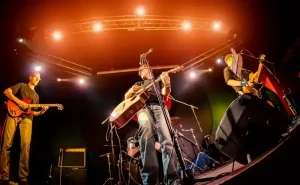
Audiovisual art can appear in many environments. One of the most visible settings is live music performance. Electronic musicians, experimental composers, and visual artists may work together to create a performance in which projected images respond to the music. The visual artist can operate the system manually, allow algorithms to generate changes, or combine both methods.
A live performance creates a sense of immediacy. The audience knows that the imagery is changing in response to the sound being produced at that moment. This makes the work feel different from a fixed music video. Even when the same composition is performed again, variations in timing, sound levels, or visual control can produce a slightly different result.
Installations provide another important setting. In a gallery or museum, visitors may enter a space where sound and imagery change continuously. Some installations respond to the presence or movement of visitors. Others use environmental recordings, sensors, or changing light conditions as input. The audience becomes part of the artwork because its presence may influence what happens.
Projection mapping can extend audiovisual experiences into architectural spaces. Artists can project moving imagery onto walls, buildings, sculptures, or unusual surfaces. When the visuals respond to sound, the physical environment can appear to move or transform. The relationship between the actual structure and the projected image becomes part of the artistic idea.
Interactive environments take this further. A visitor might move a hand, speak into a microphone, or walk through a designated area to influence the image. The system receives information from cameras, motion sensors, or other input devices and changes its output accordingly. This creates a more personal experience because each participant may produce a different visual response.
The environment itself requires careful consideration. A projection that looks clear in a dark gallery may become difficult to see in a bright public space. Room acoustics can change the way sound is experienced. Screen size, viewing distance, speaker placement, and audience movement can all influence the final result. Artists should design for the actual location rather than assuming that a work will look and sound identical everywhere.
FAQs
What is audiovisual art in simple terms?
Audiovisual art combines sound and visual imagery to create one connected artistic experience. The images may respond to music, environmental recordings, or live sounds, rather than simply appearing alongside them.
How does sound design control real-time visual imagery?
Software analyzes features such as volume, frequency, and rhythm, then uses those values to influence movement, color, shape, and other visual properties.
Which software can artists use to create audiovisual performances?
Popular options include TouchDesigner, Max, creative coding frameworks, and game engines. The right choice depends on the project’s complexity and performance needs.