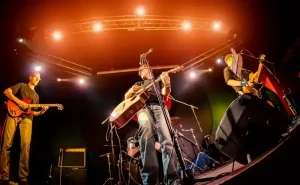
Think of the last concert that truly got under your skin. Maybe the room went quiet before a bridge, and thousands of people held the same breath. Maybe a singer’s voice cracked on a high note and the crowd roared louder for the crack than for any perfect note before it. Maybe a drummer pushed the tempo just a little, and you felt your pulse chase it. Moments like these cannot be downloaded. They happen once, in one room, to the people who are there.
That is strange when you think about it. We live in an age when any song is a tap away, mixed to perfection and polished until it shines. Yet people keep buying tickets, and in larger numbers than ever. Live Nation reported record revenue of $25.2 billion in 2025, connecting 159 million fans to more than 55,000 events, and Pollstar’s Top 100 tours grossed $8.9 billion worldwide, which is 60.8 percent above 2019. The same data shows that Gen Z fans spent about $101 on live music in the first quarter of 2025, more than millennials. A generation raised on streaming is paying a premium to stand in a crowd.
So what are they paying for? Not just the songs, since they already own those. They are paying for presence, for risk, for the feeling of watching human beings make something in real time. This article explores what defines a compelling live music performance in a world full of backing tracks, click tracks, and pre-recorded media. We will look at how technology is really used on stage, where audiences draw their line, and what artists can do to deliver shows that feel alive. Whether you are a performer, a promoter, or a fan who wants to understand why some nights feel magical, there is something here for you.
Backing Tracks Explained: Tool, Crutch, or Both?
Few topics spark more heated arguments among music fans than backing tracks. Some see them as cheating. Others see them as ordinary tools of the trade. The truth sits in a messier middle, and understanding it helps you judge what you are really hearing.
How Modern Tours Use Click Tracks and Playback
Walk backstage at a major tour and you will find a world far more technical than most fans imagine. Many bands play with in-ear monitors and a click track, a steady metronome that only the musicians hear. The click keeps the band locked to the tempo so that lighting, video, pyrotechnics, and sometimes extra audio stems stay in sync. Playback tracks may add orchestral strings, choir layers, synth textures, or percussion that would otherwise require a dozen more musicians. Even rock bands that pride themselves on raw energy often trigger a sample or two.
None of this is inherently dishonest. A band with a small lineup that wants to recreate a lush studio arrangement has to solve a practical problem, and tracks are one answer. A tour with tightly choreographed visuals, where a video wall must hit a specific beat at a specific second, also depends on timing. Management for many touring acts have described backing tracks as a common practice in modern pop touring, used to enhance orchestral sound and support background vocals. The important question is not whether tracks exist, but what they are doing. A track that fills out a texture is one thing. A track that replaces the lead vocal or the main instruments is another.
Where Audiences Draw the Line
Audiences are surprisingly forgiving about supplemental tracks and surprisingly unforgiving about fakery. The line is usually drawn at the main voice and the main instruments. Fans accept that a drummer plays to a click or that a keyboard triggers a string pad. What they resent is a performer who mimes a vocal while a recording plays, because the implicit promise of a live show is that the person on stage is making the sound you hear.
Pop history is full of cautionary tales. The 1990 Milli Vanilli scandal, in which the duo was revealed not to have sung on their own record, ended in the withdrawal of their Grammy award and remains a case study in broken trust. More recently, social media makes any suspicious moment instantly shareable, and public arguments over lip-syncing at large events continue to erupt around the world, sparking debate about accountability to paying audiences. There is also nuance. Singers dealing with illness, exhausting choreography, or very large stages sometimes use vocal support, and many fans are understanding when it is done honestly. The principle that emerges is simple: transparency and intent matter. Audiences forgive technology that serves the music, and they punish technology that hides the artist.
Risk and Presence: The Heart of a Compelling Live Music Performance
If you strip away every gadget, a compelling live music performance comes down to two things: risk and presence. Risk means that something could go wrong, and the performers are willing to let it. Presence means that they are fully here, in this room, with these people, not running an autopilot version of last night’s show.
Consider how a recorded track is built. It can be edited, tuned, comped from dozens of takes, and polished until every flaw is gone. A live performance has none of that safety net. A note can crack, a string can snap, a tempo can drift. And yet those imperfections are often what make a night unforgettable, because they prove that real humans are doing something difficult in real time. When a guitarist leans into a solo and takes a chance, the audience senses the tightrope, and it holds its breath. When the singer improvises a line because the crowd’s energy demands it, the whole room feels it. That shared uncertainty is the opposite of a playback show, where every cue is predetermined.
Presence is harder to describe but easy to recognize. It is the difference between a performer who looks at the back wall and one who looks at people. It is the way a vocalist listens to the band, the way a drummer watches the singer’s breathing, the way everyone on stage reacts to the same moment. Presence shows up in small things: a smile when the audience sings a line back, a pause to let a quiet moment land, a visible decision to slow down. It cannot be programmed. Artists who cultivate it build audiences who return, because they know each night will be a little different.
Musicianship You Can Feel: Tone, Dynamics, and Interplay
Great live performances reward careful listening. The best musicians understand that the stage is not a place to replicate a record note for note, but to translate it into a living form. That translation depends on tone, dynamics, and interplay.
Tone is the sound of a particular instrument in a particular room, and it carries emotion in ways that sheet music never can. The warmth of a vintage amp, the breath in a saxophone, the grain in a singer’s voice, all of these tell the audience something human. Dynamics are the contrasts between soft and loud, sparse and full. A song that stays at one volume becomes tiring, while a song that breathes pulls people in. Many experienced live acts treat dynamics as a core storytelling tool. They drop to a whisper so the crowd leans forward, then release the full band at the chorus, and the contrast creates a rush that no compressor can replicate.
Interplay is the conversation among musicians. In a tight band, you can hear them listening, responding, anticipating. A bass player leans into the drummer’s accent, a pianist answers a vocal phrase, and a guitarist leaves room for the singer. This interaction is what separates a band from a collection of players. It also reveals why tracks can limit a performance, because a pre-recorded part cannot respond. It will not speed up when the crowd gets excited or soften when a singer needs space. Bands that use tracks wisely build in flexibility, with sections that can stretch, loops that can be triggered live, and enough open space for improvisation.
The Setlist as Story: Pacing, Surprise, and Silence
A show is not a playlist. It is a narrative with a beginning, a middle, and an end, and the order of songs shapes how the audience feels. Skilled performers think about energy like a wave. They open with something that grabs attention, but not necessarily the biggest hit, because they need somewhere to go. They build, release, build again, and place intimate moments where they will land with the most weight. The encore is not just an afterthought. It is a final chapter, often the place where an artist offers something a little more personal or surprising.
Variety matters. Stretching a song with an extended intro, reworking an arrangement, or pairing a quiet acoustic moment with a thunderous finale gives the audience a reason to pay attention. Even fans who have heard the album a hundred times love to hear something that exists only tonight, such as a new bridge, a different tempo, a duet with a guest, or a story about how a song was written. Surprise does not require gimmicks. A well-placed cover, a stripped-down version of a hit, or a moment of silence can feel more powerful than a pyrotechnic blast.
Speaking of silence, it is one of the most underused tools in live performance. A pause before the last chorus, a held rest after a dramatic chord, a moment where the band stops and the crowd sings alone, these create tension and release. Artists who are afraid of silence tend to fill every second with sound and talk. Those who trust it give the audience room to feel, and that room is where emotional peaks are born.
Connection Without Cliché: Speaking to the Crowd
Every audience has heard the stock phrases. “Are you ready to make some noise?” “How are you feeling tonight?” “This next song is about love.” When delivered on autopilot, they sound hollow, and listeners can tell. Genuine connection is specific. It names the city and means it. It shares a short, honest story about why a song matters. It acknowledges what is happening in the room, such as the heat, the rain, a fan holding a sign, or a couple dancing in the back.
Good stage talk is brief, warm, and purposeful. It should serve the music, not interrupt it. A short story before a ballad can deepen its emotional impact, but a rambling monologue can drain the energy. Pay attention to how the room responds and adapt. Some crowds want to sing along, some want to listen, and a skilled performer reads the difference. Humor, vulnerability, and gratitude go a long way, as long as they are real. People do not need a perfectly scripted speech. They need to feel that the artist sees them.
Connection also happens without words. Eye contact with someone in the third row, a nod to the guitarist, a step toward the edge of the stage, a hand placed on the heart after a standing ovation, these gestures speak volumes. Artists who share the spotlight, introduce their bandmates warmly, and acknowledge the crew build a sense of community that extends beyond the stage. The audience is not just watching a performance. It is being invited into a relationship, even if only for ninety minutes.
Sound, Light, and Space: Production That Serves the Song
Production can elevate or overwhelm a performance. At its best, sound, lighting, and staging act as quiet partners to the music. At its worst, they become a distraction that hides the artist behind spectacle. The guiding principle is service. Does this element help the audience feel the song more deeply?
Sound is the foundation. A mix that is too loud, muddy, or harsh will exhaust listeners no matter how good the band is. Clear vocals, balanced instruments, and dynamics that are not crushed by heavy compression keep people engaged. Engineers who understand the room, adjust for acoustics, and make careful use of the low end can transform a night. Good sound also makes room for the human elements, such as breaths, strums, and the natural decay of a note, that give music its life.
Lighting shapes mood and focus. A simple wash of warm color on a quiet ballad can say more than a thousand moving beams. Strategic use of darkness directs attention and builds suspense. Video screens can add context and intimacy for people in the back of a large venue, but they should not turn the show into a movie that happens to include musicians. The most memorable productions often leave space for the performers to breathe, with design choices that match the personality of the music. Even in small venues, thoughtful lighting and a clean stage layout create a sense of occasion. The goal is not to impress with budget. It is to frame the music and the people making it.
The Audience Is Part of the Band
A concert is not a one-way broadcast. The crowd contributes energy, voice, and emotion, and the best artists treat the audience as a collaborator. When thousands of people sing a chorus back, that sound becomes part of the music. When a room falls silent for a fragile song, that silence becomes an instrument. The performance is a loop, with the stage feeding the crowd and the crowd feeding the stage.
This is one reason live music feels so different from listening alone. You are surrounded by people who share your reaction, which amplifies it. Researchers who study collective experiences often point to synchronized movement, singing, and attention as drivers of social bonding, and anyone who has ever hugged a stranger during a favorite song understands this instinctively. In a world where so much of life is mediated by screens, these shared, physical moments carry special weight.
Artists can encourage this relationship by leaving room for participation without forcing it. A simple invitation to sing a line, a call-and-response that grows naturally, or a pause that lets the crowd carry a chorus can make people feel like part of the story. Venues and promoters can help by creating comfortable, safe environments, with good sightlines, reasonable sound levels, clear communication, and respect for fans. Audiences, too, have a role. Putting the phone down for a few songs, listening with full attention, and celebrating the people on stage and around you makes the experience richer for everyone.
Using Technology Honestly: A Playbook for Artists
None of this means technology is the enemy. Used with care, it can expand what a live performance can be. The key is honesty and intention. Artists who want to build trust and deliver a compelling live music performance can follow a few guiding ideas.
First, decide what must be live. For most audiences, that means the lead vocal and the primary instruments. If a track supports the band, make sure the core of the show still depends on people playing and singing in the moment. Second, build flexibility into the setup. Use tracks that can be looped, cut, or extended, and let the band lead the technology rather than the other way around. Triggering samples manually, using stems rather than a locked full-mix backing, and rehearsing without the click occasionally all keep the show flexible.
Third, be open about your approach. Fans appreciate honesty, and a short comment about how a performance is put together, or a behind-the-scenes video showing the rehearsal process, can turn technology into part of the story. Fourth, rehearse for failure. Know what to do if a laptop crashes, a click track drops, or a monitor mix disappears. Bands that can keep playing through a technical failure earn enormous respect. Fifth, protect your voice and body. Sustainable touring depends on rest, warm-ups, smart scheduling, and good technique, since a performer who is worn out is more likely to need a crutch. Finally, remember that perfection is not the goal. A moment of vulnerability or a small mistake handled with grace often becomes the part of the show people remember most.
Expert Advice From Touring Pros
People who work in live music tend to repeat the same lessons. Veteran sound engineers say that the best mix is the one that serves the song and the room, not the one that shows off the equipment. Tour managers say that preparation is the secret to spontaneity. When the logistics are solid, the artist can relax and take creative risks. Musical directors say that arranging for the stage is different from arranging for the studio, since live shows need more space, bigger gestures, and clearer structure.
Performance coaches often emphasize physical presence. Stand like you mean it, breathe deeply, and let your body express what the song feels like. Practice in the same conditions you will perform in, with the same in-ear mix, the same shoes, and the same stage movement. Promoters advise artists to study the venue, arrive early, and talk to the crew, because small details like sightlines, stage height, and house lighting shape the audience’s experience. Finally, many veterans insist on keeping the human side visible. Thank the audience sincerely, acknowledge your team, and let people see who you are beyond the polished image. The business of live music is booming, but the heart of it remains the same: one group of people offering something real to another.
Final Thought
Years from now, no one will remember the exact settings on the mixing desk or the model of the monitors. They will remember how a night felt. They will remember the hush before the quiet song, the roar when the chorus arrived, the moment a stranger’s arm landed on their shoulder as the whole room sang together. They will remember that someone stood on a stage and offered something true.
That is what lies at the center of every compelling live music performance. Technology will keep evolving, tracks will keep supporting bands, and screens will keep growing brighter. But the essence is unchanged: human beings making sound together, in real time, for people who showed up to feel something. If you are an artist, protect that essence. If you are a fan, cherish it. And the next time the lights go down and the first note rings out, put your phone away for a moment and let yourself be there.